Charging-as-a-Service
We fund, build, own and operate the system. You pay a predictable service fee tied to use or capacity instead of buying the equipment.
Best when you want to keep capital for your core business.
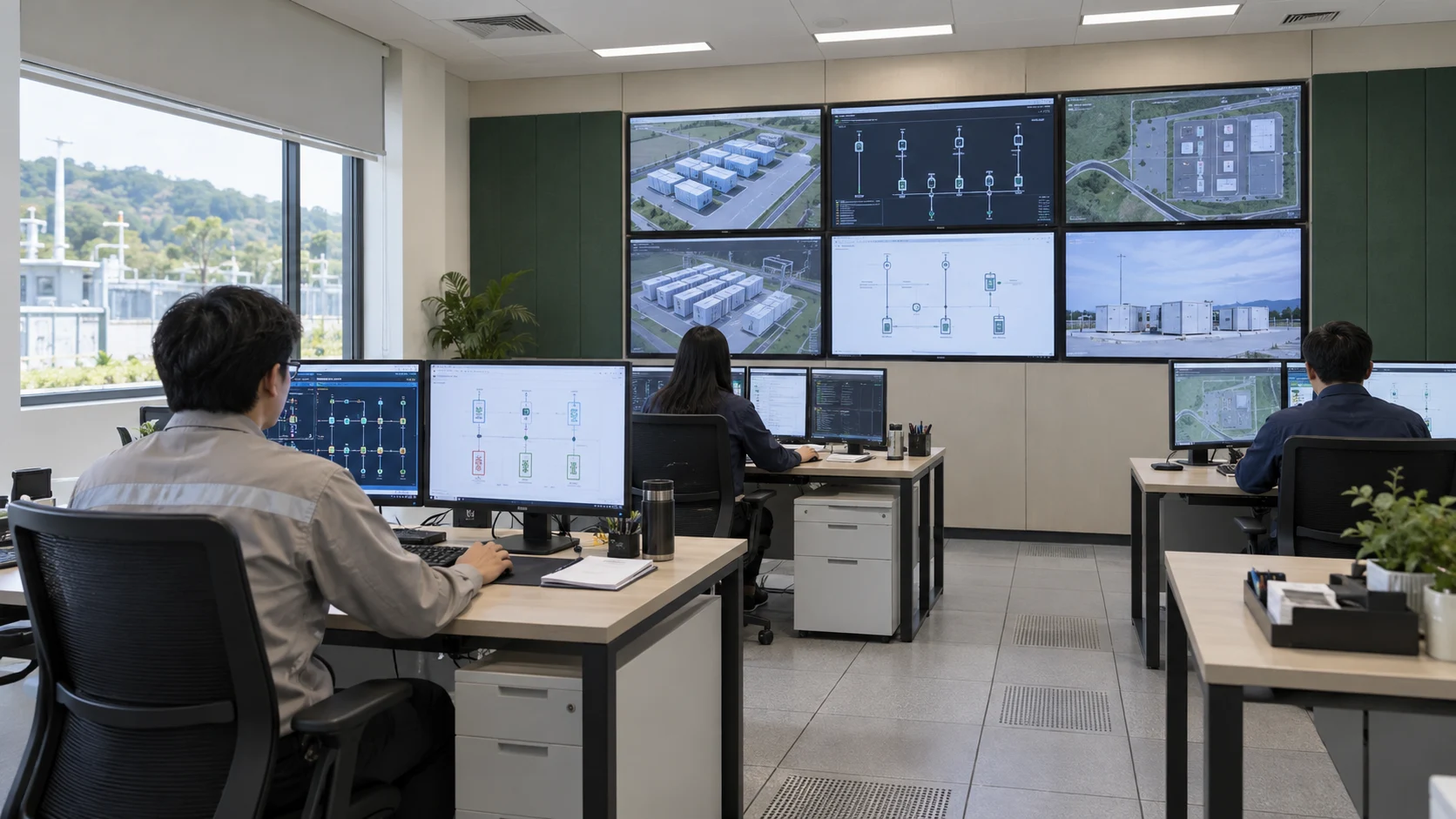
We take on the infrastructure so you don’t have to. EVERPACT develops, owns and operates EV charging and battery storage, so we stay with the asset after it’s built and we’re accountable for how it performs.
Pick a model to see where the work sits. The further right a line moves, the less of it lands on your team.
EVERPACT finances, builds, owns and operates the system. You pay a predictable fee tied to use or capacity, and keep your capital for the core business.
EVERPACT carries 8 of 10. 1 shared, 1 with you.
| Responsibility | YouEVERPACT |
|---|---|
| Site access, vehicles and schedulesWhat only you can bring | You |
| Site, fleet and utility assessment | EVERPACT |
| Permits and grid interconnection | EVERPACT |
| Capital for equipment and construction | EVERPACT |
| Engineering, procurement and construction | EVERPACT |
| Ownership of the assets | EVERPACT |
| Charging and energy software | EVERPACT |
| Monitoring, maintenance and repairs | EVERPACT |
| Uptime commitment | EVERPACT |
| End of termRenew, upgrade or remove | Decided together |
Available models depend on site qualification, financing and the contract terms agreed for each project.
Choose based on who should hold the capital, who should own the assets, and for how long.
We fund, build, own and operate the system. You pay a predictable service fee tied to use or capacity instead of buying the equipment.
Best when you want to keep capital for your core business.
We build and operate the assets for an agreed term, then transfer ownership to you with drawings, records and asset history.
Best when you want to own the infrastructure long term without building it yourself.
You fund and own the assets. We engineer, procure, construct and commission them, then run and maintain them under an operations and maintenance agreement.
Best for owners with capital ready and a clear specification.
Financing, ownership and transfer terms are agreed project by project and depend on site qualification.
Five stages, one accountable team. Here’s what you get at each one.
We review the site, your vehicles or vessels, operating schedules and the available grid capacity. Then we size a system, identify incentives that may apply and test the commercial case.
You receiveA feasibility summary, site concept and budget range.
We agree on the partnership model, term, service levels and pricing, and line up financing where the model calls for it.
You receiveA term sheet with service levels and responsibilities.
We complete detailed design, procure equipment, manage permits and the utility connection, then construct, test and commission the site.
You receiveA commissioned site with as-built drawings and test records.
We monitor the site, respond to faults, carry out planned and corrective maintenance, and report against the agreed service levels.
You receiveRegular performance and service-level reports.
At the end of the term we review the asset condition and agree what comes next: an upgrade, an extension, or a transfer to you.
You receiveA condition review, full records and, for transfers, a handover package.
An operator is only as good as its response when something goes wrong. That’s why our commitments are contractual, measurable and reported.
Service-level targets, exclusions and remedies are set in each contract.
Each project’s design basis is set by its jurisdiction and equipment. These are the references we typically start from.
IEC 61851 conductive charging, CCS and the CharIN Megawatt Charging System for heavy-duty vehicles, OCPP for charger management and ISO 15118 for vehicle communication.
The IEC 62933 series for energy storage systems, plus UL 9540, UL 9540A and NFPA 855 where a project or jurisdiction calls for them.
The IEC/IEEE 80005 shore connection series where applicable, and SAE J2954 for stationary wireless charging of light-duty vehicles.
National electrical and fire codes and the local utility’s connection requirements, confirmed for every site.
Listing a standard describes our design approach. It is not a certification of EVERPACT or of any product.
It’s a model where an operator funds, builds, owns and runs the EV charging infrastructure at your site, and you pay a service fee instead of buying the equipment. EVERPACT offers the same model for battery energy storage.
Not under Charging-as-a-Service. EVERPACT funds and owns the infrastructure, and you pay a service fee. Whether a project qualifies depends on the site, expected usage and contract term.
It depends on the model. Under Charging-as-a-Service, EVERPACT owns them for the term. Under build, own, operate, transfer, ownership passes to you at the end of the term. Under EPC plus operations, you own them from handover.
Term length is set for each project. It usually reflects the working life of the equipment and the financing behind it. We propose a term during the Structure stage.
We select equipment for each project based on your vehicles, the site and the service levels you need. If you have a preferred supplier, we can work with them, subject to a compatibility review.
EVERPACT does, under every model. We prepare the studies and applications, coordinate with the utility and build the make-ready work: the electrical service, conduit and foundations the chargers need. Under EPC plus operations, some applications are filed in your name as the owner.
We specify connectors to match your vehicles and market. That can include CCS, the CharIN Megawatt Charging System for heavy-duty vehicles, and the regional standards your vehicles use.
When EVERPACT operates the site, the response is our responsibility. Monitoring, response times and remedies are defined in your service-level agreement.
We have offices in Hong Kong and Thailand and develop projects with partners internationally. Tell us where your site is, and we’ll explain how we’d deliver it there.
Tell us where it is and how it runs today. We’ll come back with what it would take to electrify it, and which parts we can own and operate for you.